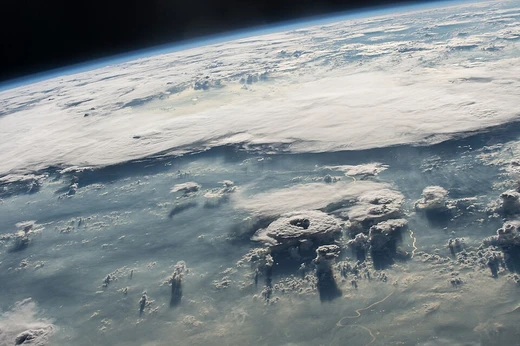
Wet season
The wet season is a period of heavy rainfall in tropical and subtropical regions.
The wet season, also known as the rainy or monsoon season, is the period when a region receives the bulk of its yearly rainfall, spanning at least one month. This phenomenon occurs in scattered areas across the tropics and subtropics. Tourist authorities sometimes refer to it euphemistically as the green season. Under the Köppen climate classification, a month in a tropical climate qualifies as wet if it gets 60 millimeters (2.4 inches) or more of precipitation on average. Unlike savanna and monsoon climates, Mediterranean climates experience wet winters and dry summers. Tropical seasonal forests are defined by alternating dry and rainy months, in contrast to tropical rainforests, which lack distinct seasons due to evenly distributed rainfall year-round. In some places with pronounced rainy seasons, a mid-season break occurs when the Intertropical Convergence Zone or monsoon trough shifts toward higher latitudes during the warm season.
When the wet season falls in summer, rain typically arrives in the late afternoon and early evening. During this time, air and freshwater quality improve, and vegetation grows substantially, leading to crop yields later in the season. Rivers overflow, and some animals retreat to higher ground. Soil nutrients decrease, and erosion increases. In tropical areas where the rainy season coincides with high temperatures, cases of malaria and dengue rise. Some animals have adapted survival strategies for the wet season. Food shortages often follow the previous dry season, as crops have not yet matured. Crops that can be planted successfully during the wet season include cassava, maize, groundnut, millet, rice, and yam. The temperate equivalent of the tropical wet season is spring or autumn.
In regions where heavy rainfall comes with a shift in wind, the wet season is called the monsoon season. Many tropical and subtropical climates follow monsoon rainfall patterns. The rain in the wet season results mainly from daytime heating, which triggers diurnal thunderstorm activity within a moist airmass, so precipitation falls mostly in late afternoon and early evening in savanna and monsoon regions. Much of the daily total rainfall occurs in the first minutes of a downpour, before storms mature into their stratiform stage. Most places have a single wet season, but some tropical areas experience two, as the monsoon trough or Intertropical Convergence Zone passes over them twice a year. Rainforests, with rainfall spread evenly throughout the year, have no wet season.
Savanna climates in Sub-Saharan Africa—including Ghana, Burkina Faso, Darfur, Eritrea, Ethiopia, and Botswana—have a distinct rainy season. Subtropical areas like Florida, South and Southeast Texas, and southern Louisiana in the United States also have one. Monsoon regions include the Indian subcontinent, Southeast Asia (including Indonesia and the Philippines), northern Australia, Polynesia, Central America, western and southern Mexico, the Desert Southwest of the United States, southern Guyana, and northeast Brazil. Northern Guyana has two wet seasons: one in early spring and another in early winter. In western Africa, southern sections have two rainy seasons, while the north has only one. Under the Mediterranean climate, the west coast of the United States, the southwest coast of Australia and South Africa, the Mediterranean coasts of Italy, Spain, Greece, Lebanon, Syria, Algeria, Morocco, Tunisia, and Turkey, as well as inland areas of Western Asia like Jordan, northern Iraq, and most of Iran, experience a wet season in winter. The wet season in Israel’s Negev Desert runs from October through May. The Sonoran Desert, at the boundary between Mediterranean and monsoon climates, receives two rainy seasons, one from each regime. The wet season goes by many local names worldwide; in Mexico, it is called storm season. The First Nations of northern Australia assign different names to short seasons, with the wet season from December to March known as Gudjewg. Its exact meaning is debated, but it is widely linked to severe thunderstorms, flooding, and abundant vegetation growth.
In tropical areas, the arrival of the monsoon lowers high daytime temperatures and raises overnight lows, reducing the daily temperature range. During the wet season, heavy rainfall and, in places like Hong Kong, onshore winds improve air quality. In Brazil, the wet season correlates with weaker trade winds off the ocean. The pH of water becomes more balanced as local aquifers recharge, and water softens because dissolved materials decrease. Erosion increases during rainy periods. Arroyos that are dry at other times fill with runoff, sometimes reaching depths of 10 feet (3.0 meters). Leaching from heavy rainfall depletes soil nutrients. Higher runoff from land affects nearby oceans, making them more stratified and less mixed due to stronger surface currents from the runoff. High rainfall can cause widespread flooding, leading to landslides and mudflows in mountainous areas, with rivers bursting their banks and submerging homes.
- definition
- Month with average precipitation of 60 mm or more (Köppen classification)
- typical timing
- Warm season or summer in many regions
- primary cause
- Daytime heating and diurnal thunderstorm activity
- associated climates
- Savanna, monsoon, Mediterranean
- key effects
- Improved air and water quality, vegetation growth, increased erosion and disease
Lore & Background
Under the Köppen climate classification, a wet season month is defined as one where average precipitation is 60 millimetres or more. In contrast to tropical rainforests, which have rainfall evenly distributed throughout the year, tropical seasonal forests have distinct dry and rainy months. Some areas with pronounced rainy seasons experience a break in rainfall mid-season when the Intertropical Convergence Zone or monsoon trough moves to higher latitudes. Most places have only one wet season, but areas of the tropics can have two, as the monsoon trough may pass over locations twice per year.
Reader's Guide
The wet season has profound significance for both natural systems and human societies. In tropical areas, it improves air quality, freshens water, and spurs substantial vegetation growth, leading to crop yields later in the season. However, it also brings challenges: rivers overflow, soil nutrients diminish, erosion increases, and the incidence of malaria and dengue rises where high temperatures coincide with rainfall. The wet season is a time of food shortages before crops mature, causing seasonal weight changes in developing countries. Floods can be exacerbated by fires from the previous dry season, which make soils hydrophobic. Governments help manage these risks through flood plain mapping and erosion control outreach. The wet season is known by many local names, such as 'storm season' in Mexico and 'Gudjewg' among First Nations of Northern Australia, reflecting its varied cultural and environmental impacts.
Did You Know?
- The wet season is sometimes called the 'green season' as a euphemism by tourist authorities.
- In the wet season, rainfall mainly occurs in late afternoon and early evening in savanna and monsoon regions.
- The wet season in the Negev Desert of Israel extends from October through May.
- Cows calve at the beginning of the wet season.
More in Meteorology 1-24
Spotted an error? Know more?
This is a living reference — every entry is fact-audited, and reader corrections feed straight into our audit queue. Suggest an edit · See this site's audit record