Hail
Solid ice precipitation from thunderstorms, often damaging.

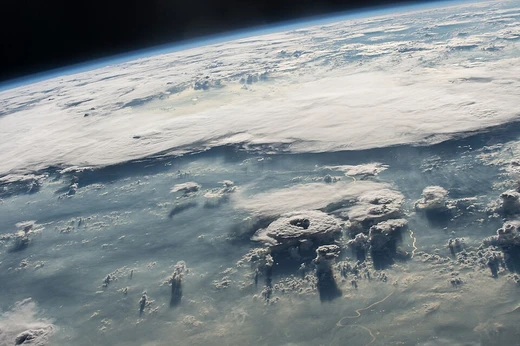
Hail is a form of solid atmospheric precipitation consisting of balls or irregular lumps of ice, each called a hailstone. It is distinct from ice pellets (American English 'sleet'), though the two are often confused. Hail is produced by cumulonimbus clouds during thunderstorms and can cause serious damage to human-made structures and farmers' crops.
- type
- Atmospheric precipitation
- composition
- Transparent ice or alternating layers of transparent and translucent ice
- typical_size
- 5 mm (0.2 in) to 15 cm (6 in) in diameter
- maximum_weight
- More than 0.5 kg (1.1 lb)
- formation_environment
- Strong updrafts in thunderstorms, especially supercells
- common_regions
- Continental interiors of mid-latitudes; high elevations in tropics
Lore & Background
The METAR reporting code for hail 5 mm or greater is GR; smaller hailstones and graupel are coded GS. The Meteorological Service of Canada issues severe thunderstorm warnings for hail 2 cm (0.79 in) or larger.
Reader's Guide
Hail is a significant meteorological phenomenon due to its potential for severe damage to structures and agriculture. The layered structure of hailstones, once thought to require multiple ascents and descents, is now understood to result from a single trajectory through varying humidity and supercooled water droplet concentrations. Hail is most common in mid-latitude continental interiors, where dry air intrusion can lower the freezing level and promote growth. In the tropics, hail is rare except at high elevations. Detection methods using weather satellites and radar exist, and severe weather warnings are issued based on size thresholds that vary by country. Hailstones can reach 15 cm in diameter and weigh over 0.5 kg, falling at speeds influenced by melting, friction, wind, and interaction with rain.
Did You Know?
- Hailstones can grow to 15 cm (6 in) in diameter and weigh more than 0.5 kg (1.1 lb).
- The METAR code for hail 5 mm or greater is GR; smaller hailstones and graupel are coded GS.
- Hail growth becomes vanishingly small when air temperatures fall below −30 °C (−22 °F).
More in Meteorology 1-24
Elsewhere in the Meteorology universe
Spotted an error? Know more?
This is a living reference — every entry is fact-audited, and reader corrections feed straight into our audit queue. Suggest an edit · See this site's audit record