Tropical climate
A hot, humid climate group with two seasons and small temperature ranges.

Vyacheslav Argenberg · CC BY 4.0
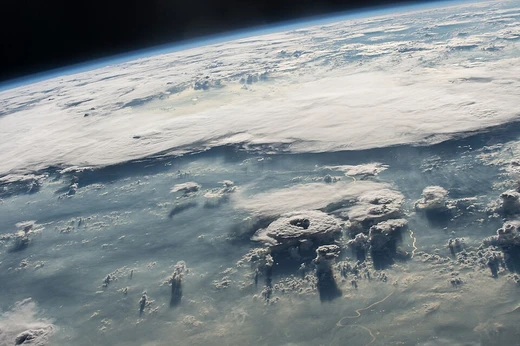
Tropical climate is the first of the five major climate groups in the Köppen climate classification, identified with the letter A. It is defined by a mean temperature of the coldest month ≥ 18 °C (64 °F), featuring hot temperatures and high humidity all year-round. Annual precipitation is often abundant and shows a seasonal rhythm, with normally only two seasons: a wet season and a dry season.
- classification_group
- A-group (tropical climate group)
- defining_temperature
- Mean temperature of coldest month ≥ 18 °C (64 °F)
- typical_latitude_range
- Below 23.5° in both hemispheres
- subtypes
- Tropical rainforest (Af), tropical monsoon (Am), tropical savanna (Aw/As)
- key_precipitation_rule
- Driest month precipitation (Pdry) determines subtype
- common_regions
- Equator, Central America, north-central South America, central Africa, southern Asia, parts of North Australia, Pacific islands
Lore & Background
The Köppen climate classification defines a tropical climate as a region where the mean temperature of the coldest month is greater than or equal to 18 °C (64 °F) and does not fit into B-group criteria. A-group regions are usually found in the tropics, below 23.5° latitude in both hemispheres, including areas around the Equator, Central America, north-central portions of South America, central Africa, southern portions of Asia, and parts of North Australia and Pacific Ocean islands. Within Group A, three types are distinguished by precipitation of the driest month: tropical rainforest (Af), tropical monsoon (Am), and tropical wet and dry or savanna (Aw or As).
Reader's Guide
Tropical climates are significant because they cover vast regions of the Earth and support distinct biomes with high biodiversity. The Köppen classification, the most widely used climate classification system, uses tropical climate as its first major group. The three subtypes—rainforest, monsoon, and savanna—are defined by precise precipitation thresholds, which in turn shape the natural vegetation: rainforests feature layered trees and epiphytes; monsoon forests have three structural layers including canopy and emergent trees; savannas are dominated by flat grasslands with scattered woodlands. These climates influence agriculture, providing resources such as coffee, cocoa, and oil palm. The small annual temperature range and intense sunlight are characteristic, while the wet and dry seasons dictate growing cycles. Understanding tropical climates is essential for studying global weather patterns, ecology, and human settlement in equatorial and tropical regions.
Did You Know?
- Tropical climates normally have only two seasons: a wet season and a dry season.
- The annual temperature range in tropical climates is normally very small.
- Tropical rainforest climate (Af) requires precipitation of the driest month to be ≥ 60 mm.
- Tropical savanna climate covers around 11-13% of the Earth's surface with grassland vegetation.
Institutional Evolution and Governance
The Indian Institute of Tropical Meteorology traces its origins to India's third five-year plan, which called for a dedicated research body to advance understanding of the ocean–atmosphere climate system.
Computational Power and Forecasting Capability
IITM hosts some of India's most powerful computational infrastructure for weather and climate modelling. Prime Minister Modi personally inaugurated the Arka high-performance computing system, named to reflect its connection to the Sun, which delivers 11.77 PetaFLOPS of processing power alongside 33 petabytes of storage. This capability is expected to sharpen the country's global weather prediction models, tightening horizontal resolution from the previous 12-kilometre grid down to 6 kilometres. The institute also houses Adithya, one of the largest HPC facilities in the nation, which serves as a shared resource across all Ministry of Earth Sciences institutions. Another landmark is Pratyush, a supercomputer whose name translates to 'first light on the sky before the rising Sun.' Inaugurated on 8 January 2018 by Union Minister for Science and Technology Dr. Harsh Vardhan, Pratyush combines two HPC units: a 4.0-petaflops cluster at IITM Pune and a 2.8-petaflops unit at the National Centre for Medium Range Weather Forecasting in Noida, yielding a combined 6.8 petaflops.
Research Portfolio and Academic Training
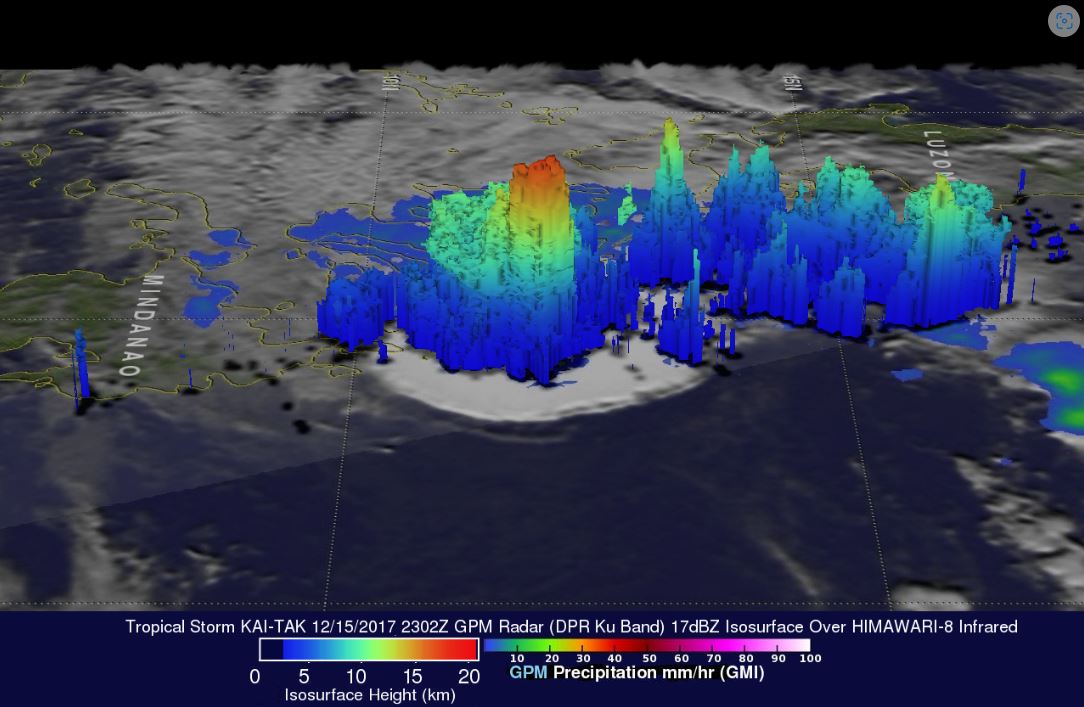
IITM operates as India's national hub for both fundamental and applied research in monsoon meteorology, with a broad portfolio spanning multiple fronts. Its active projects include the Monsoon Mission, the Center for Climate Change Research, the Physics and Dynamics of Tropical Clouds programme, Metropolitan Air Quality and Weather Forecasting Services, Climate Variability and Prediction, the Lower Atmospheric Research using Unmanned Aerial System Facility (LARUS), and the Atmospheric Research Testbed. Together these initiatives cover everything from cloud microphysics to urban air quality and from drone-based atmospheric sampling to long-range climate prediction. On the academic side, the institute offers M.Sc., M.Tech., and Ph.D. programmes delivered jointly under the Department of Atmospheric and Space Sciences at the University of Pune. Beyond formal degree tracks, students from Indian universities and research institutes can apply for summer or master's-level internship projects attached to individual IITM scientists, giving them hands-on exposure to ongoing tropical climate research. This blend of project-driven science and structured graduate training positions IITM as a critical pipeline for India's next generation of atmospheric scientists.
Distinguished Researchers and Scientific Contributions
Several prominent scientists have shaped IITM's reputation as a leading centre for tropical climate research. Sulochana Gadgil, a distinguished monsoon expert, served as a senior scientist at the institute and contributed to the understanding of India's seasonal rainfall. Bhupendra Nath Goswami, a climate scientist who held the position of Director at IITM, is known for his research on intraseasonal monsoon variability. Roxy Mathew Koll, a climate scientist, specialises in the Indian Ocean and monsoon dynamics, extending the institute's work into ocean–atmosphere interactions. Gufran-Ullah Beig, an Indian meteorologist, has also been part of the institute's research community. Together, these researchers embody IITM's core mission of expanding scientific understanding of the ocean–atmosphere climate system to improve weather and climate forecasts. Their collective work on monsoon variability, Indian Ocean dynamics, and tropical meteorology forms a significant part of the institute's long-standing contribution to India's national forecasting and climate research capability.
Gallery


Frequently Asked Questions
What is Tropical climate?
Tropical climate is the A-group in the Köppen system, representing the first of five major climate categories. It is characterized by consistently warm conditions and high moisture levels throughout the entire year.
What temperature threshold defines Tropical climate?
A location qualifies as tropical if its coldest month still averages at least 18 °C (64 °F). This single rule is what separates it from every other Köppen group.
What subtypes exist under Tropical climate?
The group splits into three subtypes—tropical rainforest (Af), tropical monsoon (Am), and tropical savanna (Aw/As)—distinguished mainly by how much rain falls in the driest month.
Where on Earth does Tropical climate occur?
It is typically found at latitudes below 23.5° in both hemispheres, covering areas like the equatorial belt, central Africa, parts of South America, southern Asia, and scattered Pacific islands.
How many seasons does Tropical climate experience?
Rather than the four temperate seasons, tropical regions generally see just two: a wet period and a dry period, with very little variation in temperature between them.
More in Meteorology 25-38
Elsewhere in the Meteorology universe
Spotted an error? Know more?
This is a living reference — every entry is fact-audited, and reader corrections feed straight into our audit queue. Suggest an edit · See this site's audit record