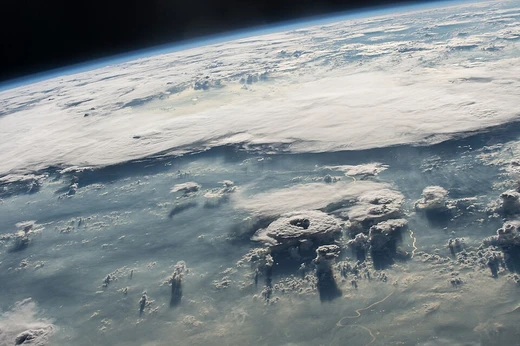
Temperate climate
Middle-latitude climates with distinct seasons and moderate temperatures.

Unknown author · Public domain
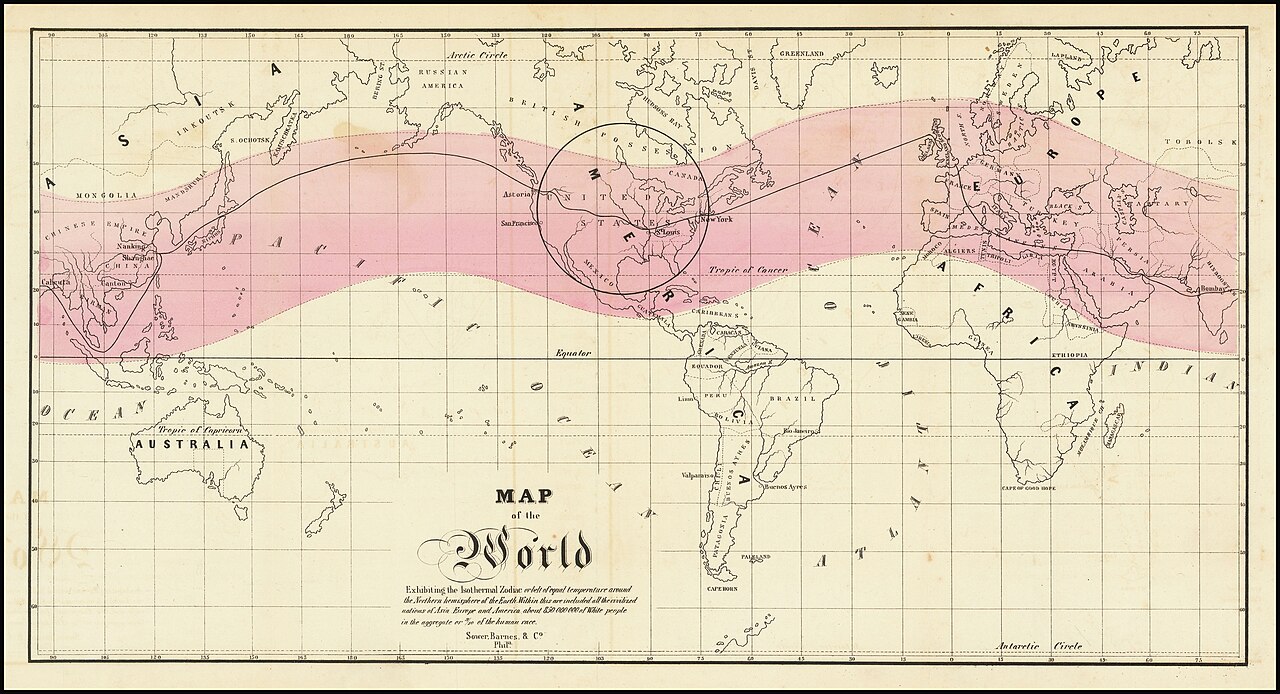
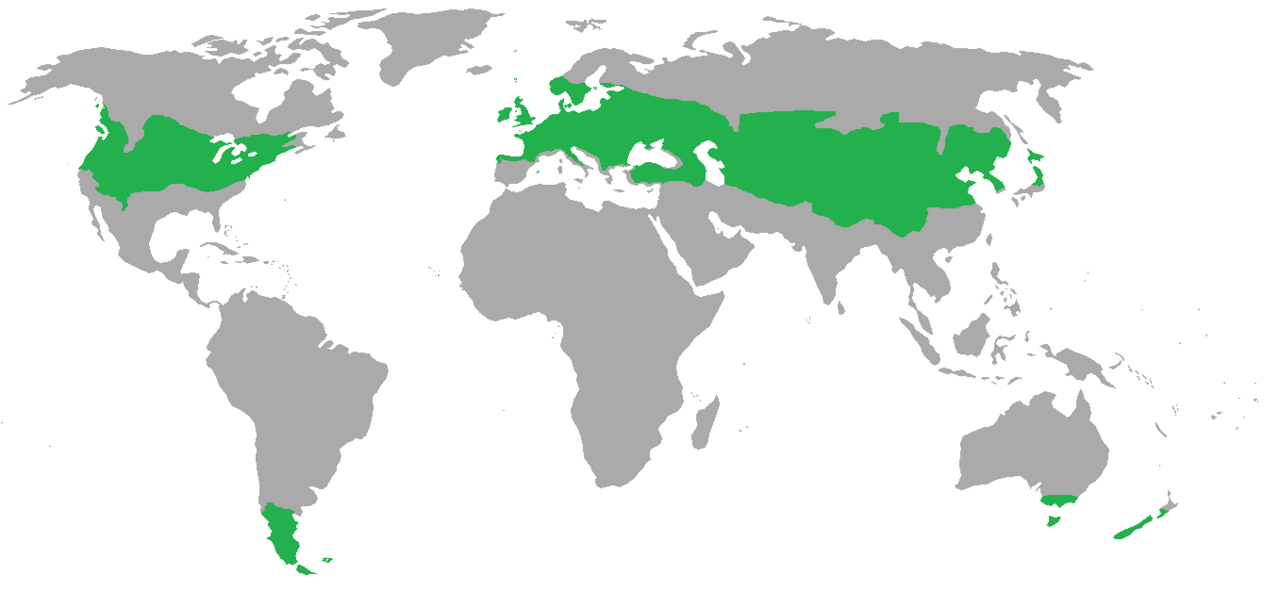
Temperate climates occur in the middle latitudes, approximately 23.5° to 66.5° north and south of the Equator, spanning between the tropics and the polar regions. These zones are characterized by wider temperature ranges throughout the year and more distinct seasonal changes compared to tropical climates, with variations often differing only in precipitation. Latitudinal position, sea currents, prevailing wind direction, continentality, and altitude all shape temperate climates.
- latitudinal_range
- 23.5° to 66.5° N/S
- Köppen_classification
- C (mean coldest month above -3°C but below 18°C)
- subtypes
- subtropical, middle latitude, subpolar
- key_influences
- sea currents, wind direction, continentality, altitude
- notable_subzones
- humid subtropical, Mediterranean, oceanic, humid continental, subpolar oceanic
Lore & Background
The north temperate zone extends from the Tropic of Cancer (approximately 23.5° north latitude) to the Arctic Circle (approximately 66.5° north latitude), while the south temperate zone extends from the Tropic of Capricorn (approximately 23.5° south latitude) to the Antarctic Circle (approximately 66.5° south latitude). The Köppen climate classification defines a climate as temperate when the mean temperature is above −3°C but below 18°C in the coldest month, though some adaptations set the minimum at 0°C. Broader definitions may include continental climates (classified as D) with more extreme temperatures.
Reader's Guide
Temperate climates are significant because they encompass the most densely populated regions of the world, supporting diverse ecosystems and agriculture. The classification includes subtropical zones (humid subtropical, Mediterranean, and subtropical highland climates) near the tropics, middle latitude zones (oceanic and humid continental climates) with distinct four-season patterns, and subpolar zones on the poleward edge. Oceanic climates feature mild summers and cool winters with even precipitation, while humid continental climates have hot summers and cold winters due to large landmasses. Mediterranean climates have dry summers and wet winters, occurring on western continental edges. Subtropical highland climates in mountainous areas have mild temperatures year-round. The subpolar oceanic climate is cooler, with more snowfall and rare temperature extremes. This classification system helps in understanding global climate patterns, agricultural planning, and ecological studies.
Did You Know?
- The Köppen climate classification defines temperate climates as having a mean temperature above −3°C but below 18°C in the coldest month.
- Mediterranean climates have a dry summer and wet winter, occurring mostly on western edges of continents.
- Humid continental climates are sometimes included in the broader definition of temperate climates but are classified separately in Köppen.
- Subpolar oceanic climates are found in parts of coastal Iceland, the Faroe Islands, and the Aleutian Islands.
Geographic Boundaries and Seasonal Character
The temperate zones occupy the middle latitudes of Earth, stretching from roughly 23.5 degrees to 66.5 degrees north and south of the Equator. The north temperate zone runs from the Tropic of Cancer to the Arctic Circle, while the south temperate zone spans from the Tropic of Capricorn to the Antarctic Circle. What sets these zones apart from tropical regions is the breadth of their annual temperature swings and the clarity of their seasonal transitions. Where tropical climates show only modest variation, temperate zones experience pronounced shifts between seasons, with precipitation amounts being the primary differentiator among them. Beyond simple latitude, the shape of a region's climate is sculpted by ocean currents, prevailing wind patterns, the sheer size of surrounding landmasses, and elevation. Together, these factors produce the rich diversity of conditions found across the temperate belt.
The Köppen Framework and Temperature Thresholds
The Köppen climate classification provides the formal language for identifying temperate conditions. Under this system, a climate earns the letter C when the average temperature in its coldest month stays above negative three degrees Celsius (26.6 degrees Fahrenheit) yet below 18 degrees Celsius (64.4 degrees Fahrenheit). This specific lower bound was chosen to account for the persistence of frost, a defining feature of temperate environments. Some regional adaptations of the Köppen scheme shift that minimum threshold to zero degrees Celsius (32 degrees Fahrenheit), slightly narrowing the category. When the definition is broadened, continental climates carrying the letter D are often folded into the temperate family. These D climates exhibit more extreme temperature ranges, with coldest-month averages typically dipping below negative three degrees Celsius. In this expanded view, the temperate zone encompasses both the milder C-type regions and the more severe D-type landscapes, united by their position in the middle latitudes.
Subtropical Diversity and Rainfall Patterns
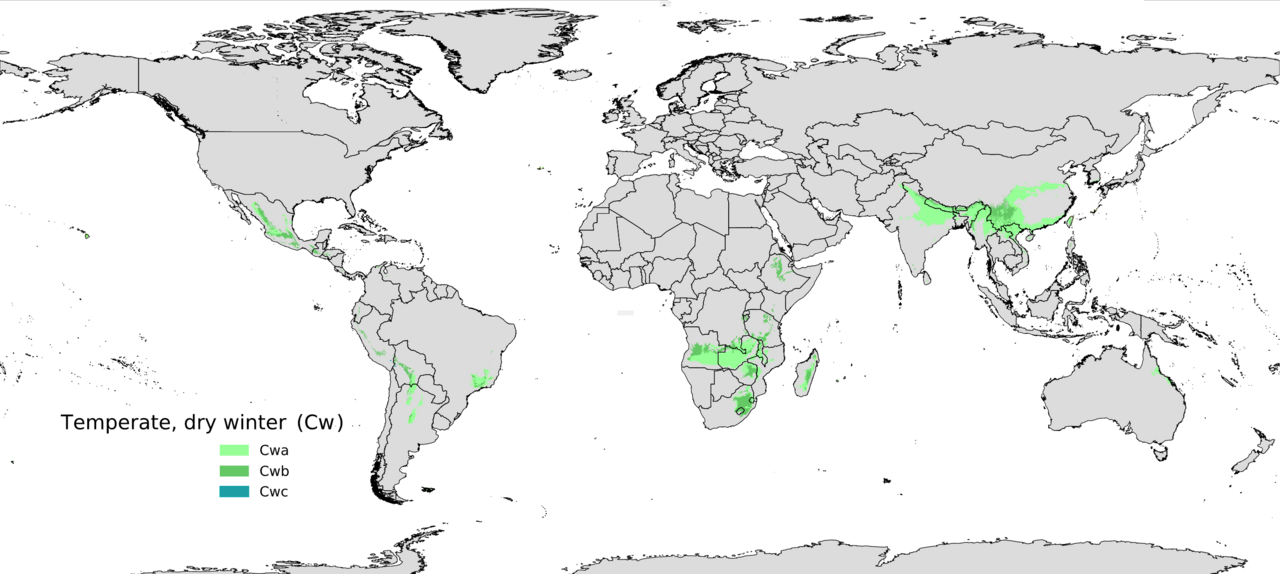
The subtropical portion of the temperate zone, found between 23.5 and 35 degrees latitude, carries a stronger tropical influence and tends toward warmer year-round temperatures with longer, hotter summers and shorter, milder winters where freezing precipitation is rare. Within this band, three distinct rainfall signatures emerge. Humid subtropical climates, labeled Cfa and Cwa, deliver long, hot, humid summers with convective showers and a peak in rainfall during the hottest months. In monsoon-influenced Cwa areas, such as parts of southern China, more than 80 percent of annual precipitation can fall within the five warmest months. Mediterranean climates, Csa and Csb, invert this pattern entirely, featuring dry summers and wet winters, and cluster along western continental edges in the Mediterranean basin, coastal California, southwestern Australia, the Western Cape, and central Chile. Highland variants, Cwb and Cfb, offer mild temperatures with either evenly distributed rainfall or a monsoon-driven dry-wet split.
Middle Latitude Contrasts: Oceanic versus Continental
Between roughly 35 and 66.5 degrees latitude, the temperate zone reaches its middle-latitude core, where polar and tropical air masses exert roughly equal influence. This band hosts two fundamentally different temperate expressions. Oceanic climates, classified as Cfb, are shaped by on-shore winds blowing from cool, high-latitude oceans to the west. The result is a mild summer, a cool but not freezing winter, and precipitation spread fairly evenly across all months, often accompanied by persistent cloud cover. Regions like northwestern Europe, northwestern North America, southeastern Australia, and most of New Zealand exemplify this pattern. In sharp contrast, humid continental climates, spanning Dfa through Dsb, are driven by vast landmasses and seasonal wind shifts. They produce the most severe seasonal temperature swings within the temperate family: scorching summers paired with bitterly cold winters. These continental zones, while sometimes classified separately under the D letter, are frequently included in the broader temperate definition and display the most prototypical four-season rhythm.
Gallery


Frequently Asked Questions
Who is Temperate climate?
Temperate climate is the middle-latitude band stretching roughly from 23.5° to 66.5° north and south of the Equator, wedged between the tropics and the polar zones. In the Köppen classification it carries the letter C, meaning the coldest month averages above −3 °C yet below 18 °C.
What are Temperate climate's powers/role?
Its signature ability is producing pronounced seasonal swings in temperature and often in rainfall, far more dramatic than in tropical regimes. Sea currents, prevailing wind direction, continentality, and altitude all modulate how a particular region expresses those seasonal shifts.
What subtypes does Temperate climate have?
The family splits into subtropical, middle-latitude, and subpolar branches, with well-known subzones including humid subtropical, Mediterranean, oceanic, humid continental, and subpolar oceanic. The subzones differ primarily in how precipitation is distributed across the year rather than in total temperature range.
How does Temperate climate's story end?
At its outer margins it gradually blends into polar climates beyond about 66.5° latitude, while its inner edge fades into tropical regimes near 23.5°. The handoff is rarely a hard line; altitude and ocean currents tend to smooth the transition between neighboring climate groups.
Why is Temperate climate important?
It covers the latitudinal belt where most of the world's population lives, so its moderate temperatures and reliable seasonal cycles underpin daily agriculture, settlement patterns, and weather forecasting. Its wide variability also makes it a primary focus for climate-change and atmospheric-circulation research.
More in Meteorology 25-38
Elsewhere in the Meteorology universe
Spotted an error? Know more?
This is a living reference — every entry is fact-audited, and reader corrections feed straight into our audit queue. Suggest an edit · See this site's audit record