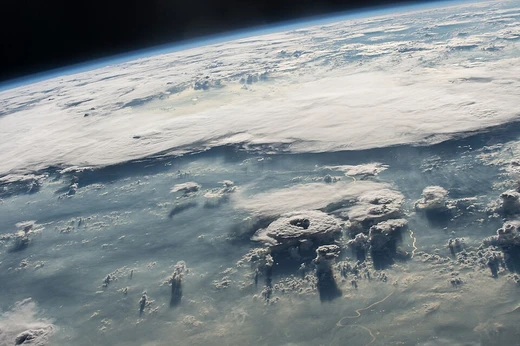
Water cycle
Continuous movement of water across Earth's reservoirs.

The water cycle, also known as the hydrologic or hydrological cycle, is a biogeochemical cycle describing the continuous movement and change in form of water on, above, and below the Earth's surface. It is driven by solar energy and involves processes such as evaporation, condensation, precipitation, and runoff, moving water through reservoirs including oceans, ice, freshwater, and the atmosphere.
- type
- Biogeochemical cycle
- key_processes
- Evaporation, transpiration, condensation, precipitation, sublimation, infiltration, surface runoff, subsurface flow
- primary_energy_source
- Solar radiation
- ocean_evaporation_share
- 86% of global evaporation
- ocean_precipitation_share
- 78% of global precipitation
- atmospheric_residence_time
- About 9 days
Lore & Background
The water cycle involves the continuous change of water between liquid, solid (ice), and vapor phases. The ocean holds 97% of the planet's total water and is the source of 86% of global evaporation. Evaporation absorbs heat (latent heat of vaporization), while condensation and melting release heat, transferring energy globally from the tropics to the poles via ocean circulation. The evaporative phase purifies water by separating it from salts and particles, and condensation replenishes land with freshwater.
Reader's Guide
The water cycle is essential for maintaining most life and ecosystems on Earth. It transports minerals across the globe and reshapes geological features through weathering, erosion, and deposition. Human actions such as deforestation, urbanization, and groundwater extraction alter natural landscapes and affect the cycle. Climate change intensifies the water cycle, shifting precipitation patterns, increasing extreme weather events, and changing rainfall timing and intensity. These changes impact ecosystems, water availability, agriculture, and human societies. The cycle's residence times vary greatly: groundwater can remain underground for over 10,000 years, while atmospheric water vapor averages about 9 days before precipitating.
Did You Know?
- The ocean holds 97% of the total water on the planet.
- 86% of global evaporation occurs over the ocean.
- 78% of global precipitation occurs over the ocean.
- Groundwater can spend over 10,000 years beneath Earth's surface before leaving.
More in Meteorology 25-38
Elsewhere in the Meteorology universe
Spotted an error? Know more?
This is a living reference — every entry is fact-audited, and reader corrections feed straight into our audit queue. Suggest an edit · See this site's audit record