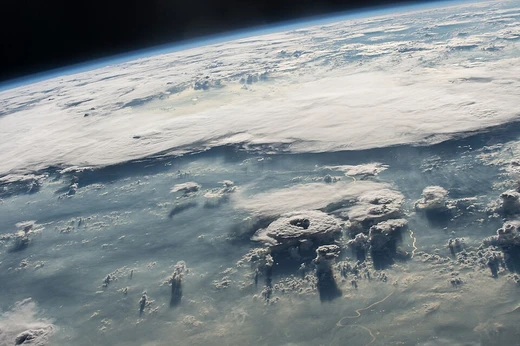
Tropical cyclone
A rapidly rotating storm system over warm tropical waters.

Vyacheslav Argenberg · CC BY 4.0
A tropical cyclone is a rapidly rotating storm system with a low-pressure area, a closed low-level atmospheric circulation, strong winds, and a spiral arrangement of thunderstorms that produce heavy rain and squalls. Depending on its location and strength, it is called a hurricane, typhoon, tropical storm, cyclonic storm, tropical depression, or simply cyclone. These storms form over large bodies of relatively warm water and derive their energy from the evaporation of ocean water, which condenses into clouds and rain. They are typically between 100 and 2,000 km in diameter and rarely form within 5° of the equator due to the Coriolis effect.
- Average annual named cyclones
- 80 to 90
- Average annual hurricane-force cyclones
- over half of named cyclones
- Typical diameter
- 100 to 2,000 km
- Minimum wind speed for classification
- 35 kn (65 km/h; 40 mph)
- Primary energy source
- evaporation of warm ocean water
- Peak activity month globally
- September
- Least active month globally
- May
Lore & Background
Tropical cyclones form almost exclusively over tropical seas, with origins in the Intertropical Convergence Zone (ITCZ). They require sea surface temperatures around 27°C, low vertical wind shear, atmospheric instability, high humidity, and sufficient Coriolis force. The strong rotating winds result from conservation of angular momentum as air flows inward. Cyclones in the Northern Hemisphere rotate counterclockwise; in the Southern Hemisphere, clockwise. South Atlantic tropical cyclones are very rare due to strong wind shear and a weak ITCZ.
Reader's Guide
Tropical cyclones are significant because they cause widespread coastal damage from strong winds, rain, high waves, storm surges, and tornadoes, while inland regions suffer less wind damage but can experience severe flooding. Climate change exacerbates their impact by increasing duration, occurrence, and intensity due to warming ocean waters and intensification of the water cycle. They concentrate water content from a large area into precipitation over a much smaller area, leading to river flooding and overwhelming local water control structures. An average of 86 tropical cyclones of tropical storm intensity form annually worldwide, with 47 reaching hurricane-force winds and 20 becoming intense (Category 3 or higher). Their formation is modulated by climate oscillations such as ENSO and the Madden-Julian oscillation.
Did You Know?
- Tropical cyclones rarely form within 5° of the equator due to the Coriolis effect.
- South Atlantic tropical cyclones are very rare because of consistently strong wind shear and a weak Intertropical Convergence Zone.
- The energy source of tropical cyclones differs from mid-latitude storms like nor'easters, which are powered by horizontal temperature contrasts.
- November is the only month in which all tropical cyclone basins are in season.
Structure and the Physics of Rotation
A cyclone is fundamentally a low-pressure system defined by its spiraling winds. At its heart lies the eye—the region of lowest atmospheric pressure in the surrounding area. What keeps this structure from simply collapsing inward is a delicate equilibrium between the pressure gradient force pulling air toward the center and the Coriolis effect deflecting that flow. Without this balance, the pressure differential would cause the system to implode. The Coriolis effect also dictates the direction of rotation: counterclockwise when viewed from above in the Northern Hemisphere, clockwise in the Southern. This has practical consequences for where the most destructive winds strike. In the Northern Hemisphere, a cyclone moving northward produces its fastest surface winds on its eastern flank, while one traveling westward concentrates peak winds along its northern edge. The Southern Hemisphere mirrors these patterns. These structural principles are universal across all cyclone types, from tropical storms to extratropical systems, and they explain why the same storm can devastate one coastline while sparing another.
Formation and the Life Cycle
Cyclogenesis—the process by which cyclonic circulation develops and strengthens—encompasses several distinct mechanisms. Tropical cyclogenesis specifically requires two key ingredients: sufficiently warm sea surface temperatures to fuel latent heat release through intense thunderstorm activity, and low vertical wind shear to allow the system to organize. These warm-core systems are driven by convection and represent a fundamentally different formation pathway from mid-latitude cyclones. Extratropical cyclones, by contrast, originate as disturbances within baroclinic zones—broad regions where sharp mid-latitude temperature contrasts exist. As these zones contract, weather fronts form and the cyclonic circulation tightens. Over a typical two-to-six-day life cycle, the storm is steered by the subtropical jet stream. In its final phase, the cold front overtakes the warm front, forcing warm air aloft into a feature called a trowal, and the system becomes a cold-core occluded cyclone. Cyclones can even transition between tropical, subtropical, and extratropical phases during their existence.
Naming and Regional Terminology
The word cyclone traces back to the Greek kýklos, meaning circle or ring, a reference to the characteristic spiraling pattern of the winds. Despite this shared scientific root, different ocean basins use different names for the same phenomenon. In the Atlantic and northeastern Pacific, the storm is called a hurricane—a word derived from Huracan, the ancient Central American deity of wind. The Indian and South Pacific Oceans use the term cyclone, while the northwestern Pacific employs the word typhoon. These regional distinctions reflect cultural and linguistic heritage rather than any physical difference in the storms themselves. The naming convention underscores how a single meteorological concept has been woven into diverse human traditions across the globe, each culture imprinting its own identity on the same swirling mass of air.
Fronts and Associated Weather Phenomena
Weather fronts represent the boundaries where air masses of differing temperature, humidity, and density collide, and they are responsible for the most dramatic meteorological phenomena associated with cyclones. A strong cold front, typically positioned west of the circulation center, often produces narrow bands of thunderstorms and severe weather, sometimes preceded by squall lines or dry lines. These cold fronts generally travel from west to east. Warm fronts, forming east of the cyclone center, are usually heralded by stratiform precipitation and fog, and they migrate poleward ahead of the storm's path. As the cyclone matures, the faster-moving cold front eventually catches up with the warm front, reducing its length and forcing the warm air mass upward into a trough aloft. This creates an occluded front that wraps around the storm center, signaling the late stage of the life cycle. The interplay of these fronts governs the spatial distribution of precipitation, wind, and severe weather across the cyclone's footprint.
Gallery
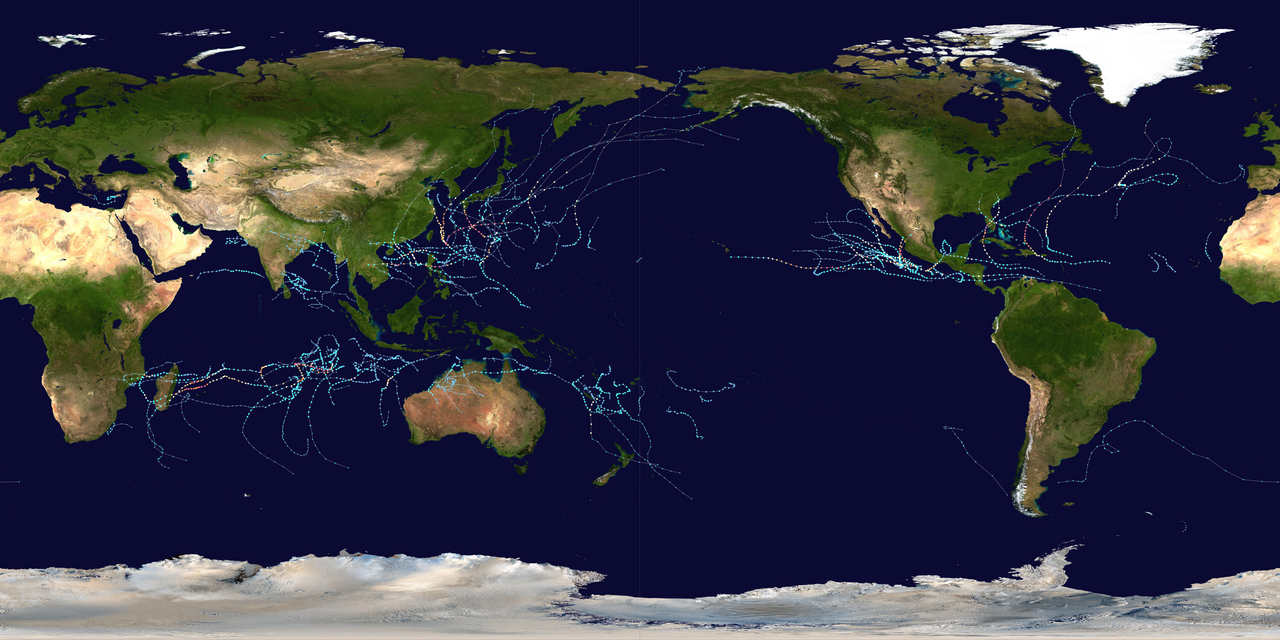
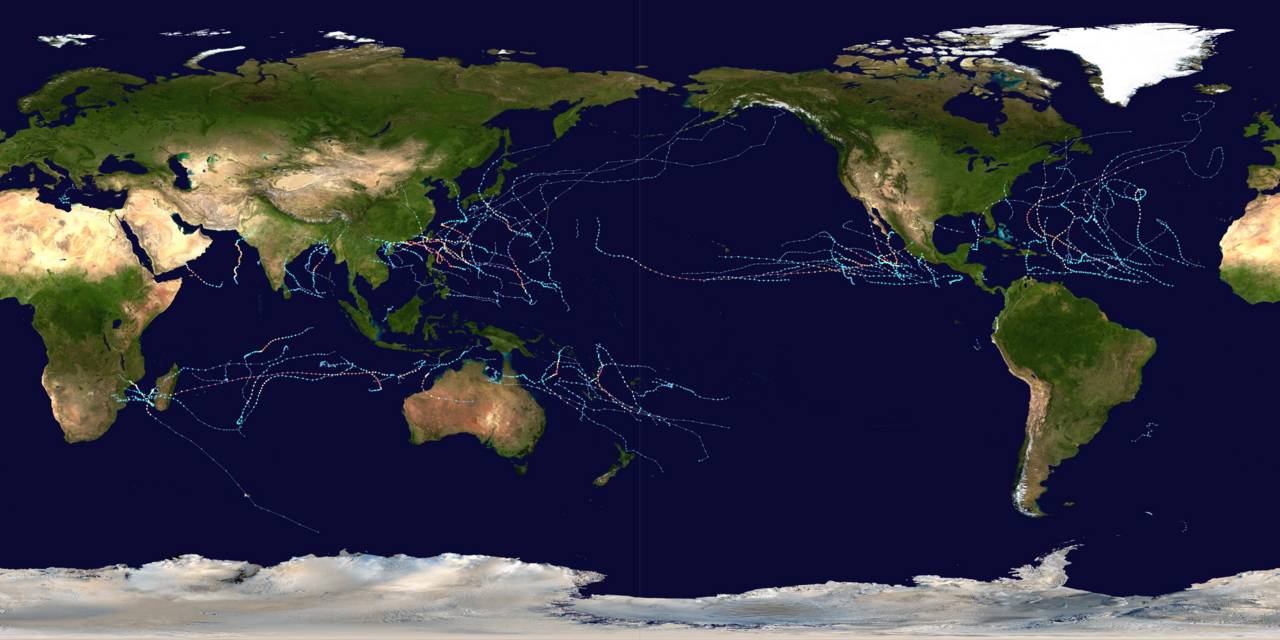
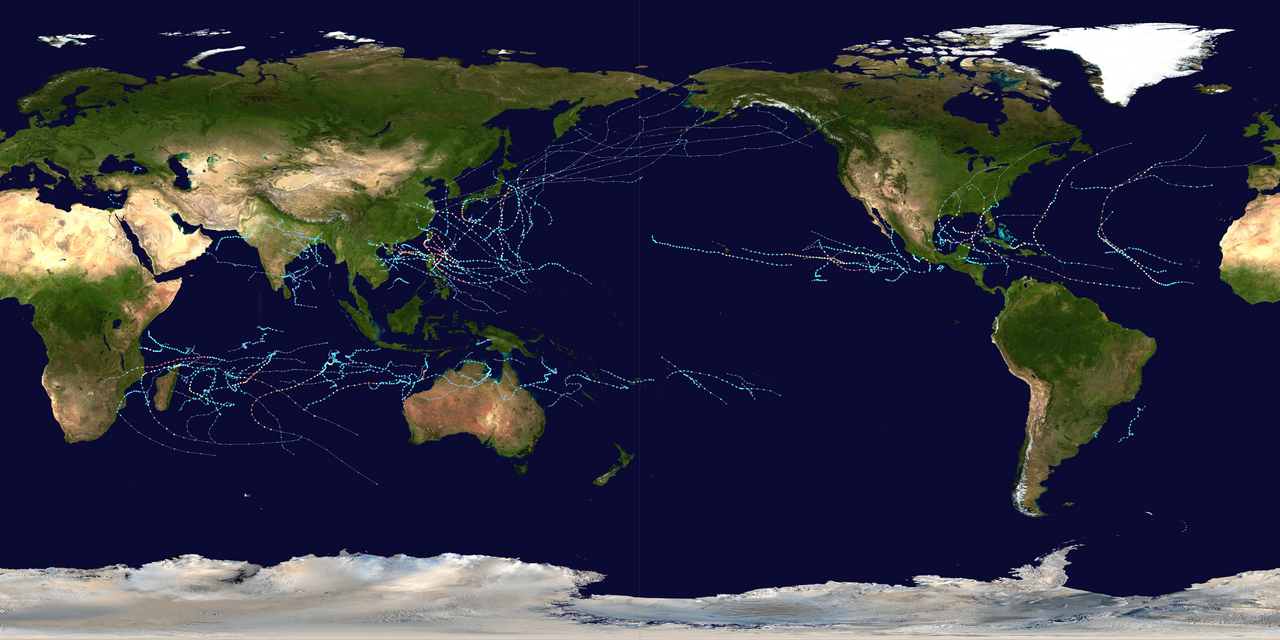
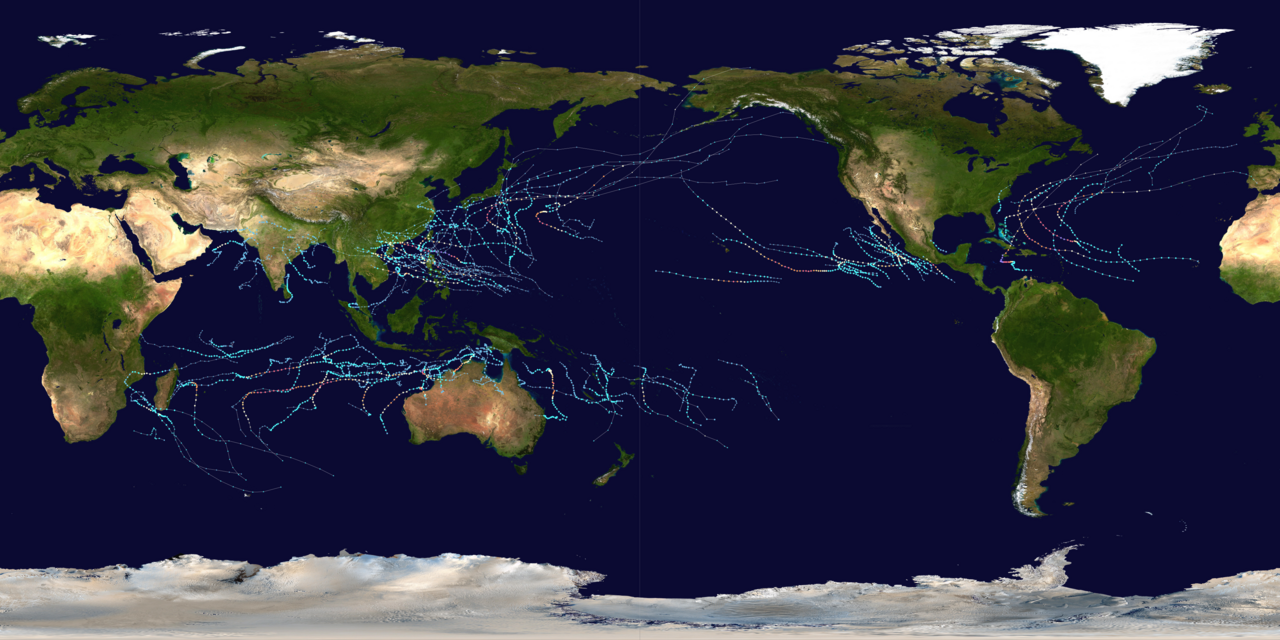
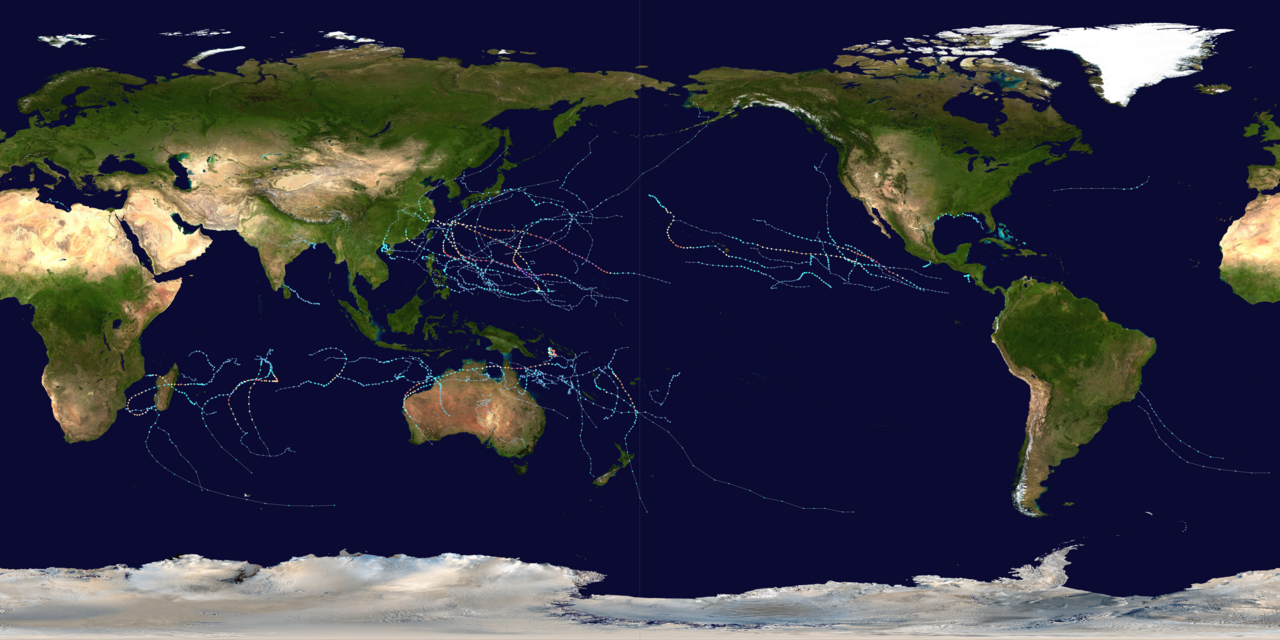
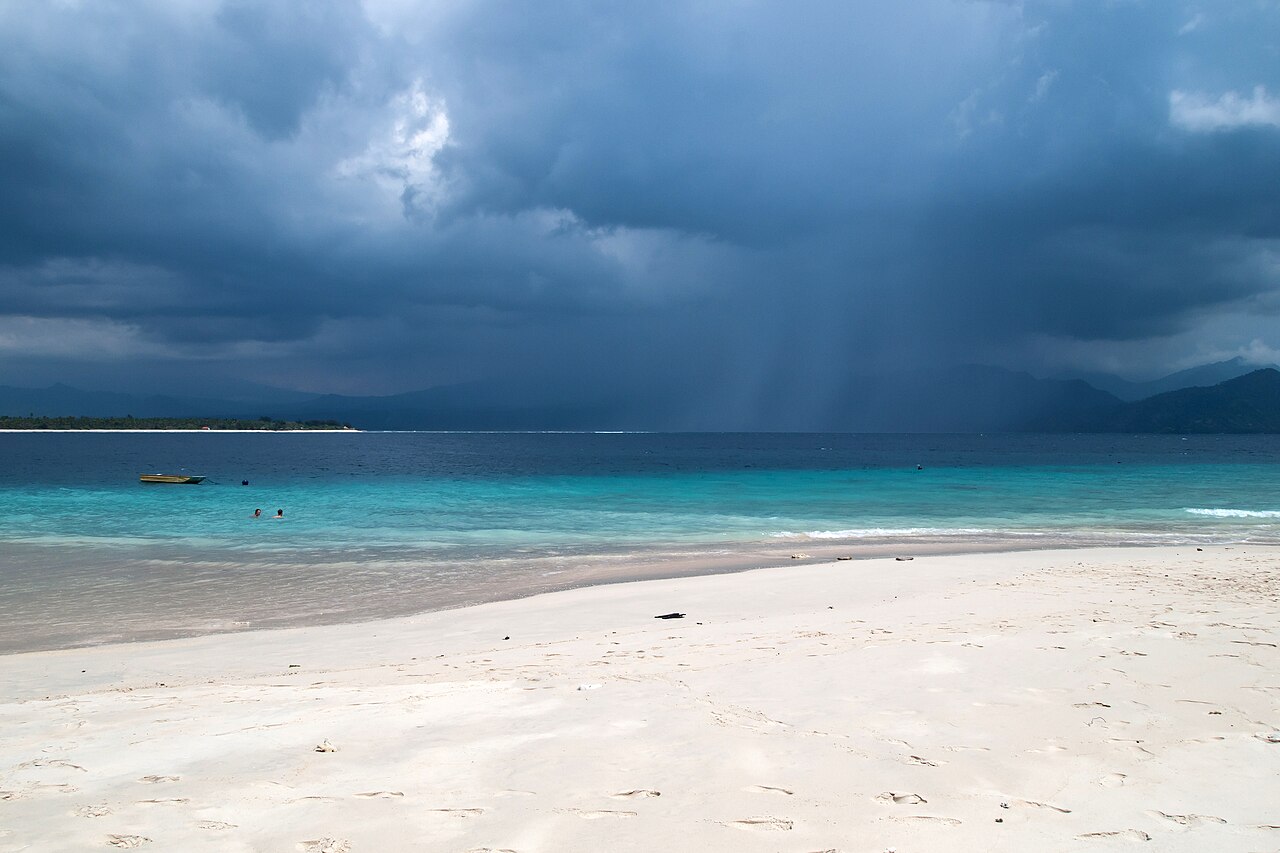
Frequently Asked Questions
What is a tropical cyclone?
It is a rapidly rotating storm system built around a low-pressure center, featuring a closed low-level circulation, strong winds, and a spiral band of thunderstorms that dump heavy rain and squalls. These systems develop over large stretches of warm tropical ocean water.
What powers a tropical cyclone?
The storm draws nearly all of its energy from the evaporation of warm ocean water. As that moisture rises, condenses into clouds, and releases as rain, the latent heat released fuels the circulation and keeps the system spinning.
How big can a tropical cyclone get?
Typical diameters range from 100 to 2,000 kilometers, which makes them some of the largest organized weather systems on the planet.
What wind speed is needed for a storm to be classified as a tropical cyclone?
Sustained winds must reach at least 35 knots, equivalent to 65 km/h or 40 mph, before the system qualifies under that classification.
When is tropical cyclone activity at its global peak?
September sees the highest average number of active storms worldwide. Globally, 80 to 90 named cyclones form each year, and more than half of those strengthen to hurricane-force winds.
More in Meteorology 25-38
Elsewhere in the Meteorology universe
Spotted an error? Know more?
This is a living reference — every entry is fact-audited, and reader corrections feed straight into our audit queue. Suggest an edit · See this site's audit record