Trade winds
Prevailing easterly winds that shaped global navigation and climate.

Peter Trimming · CC BY-SA 2.0
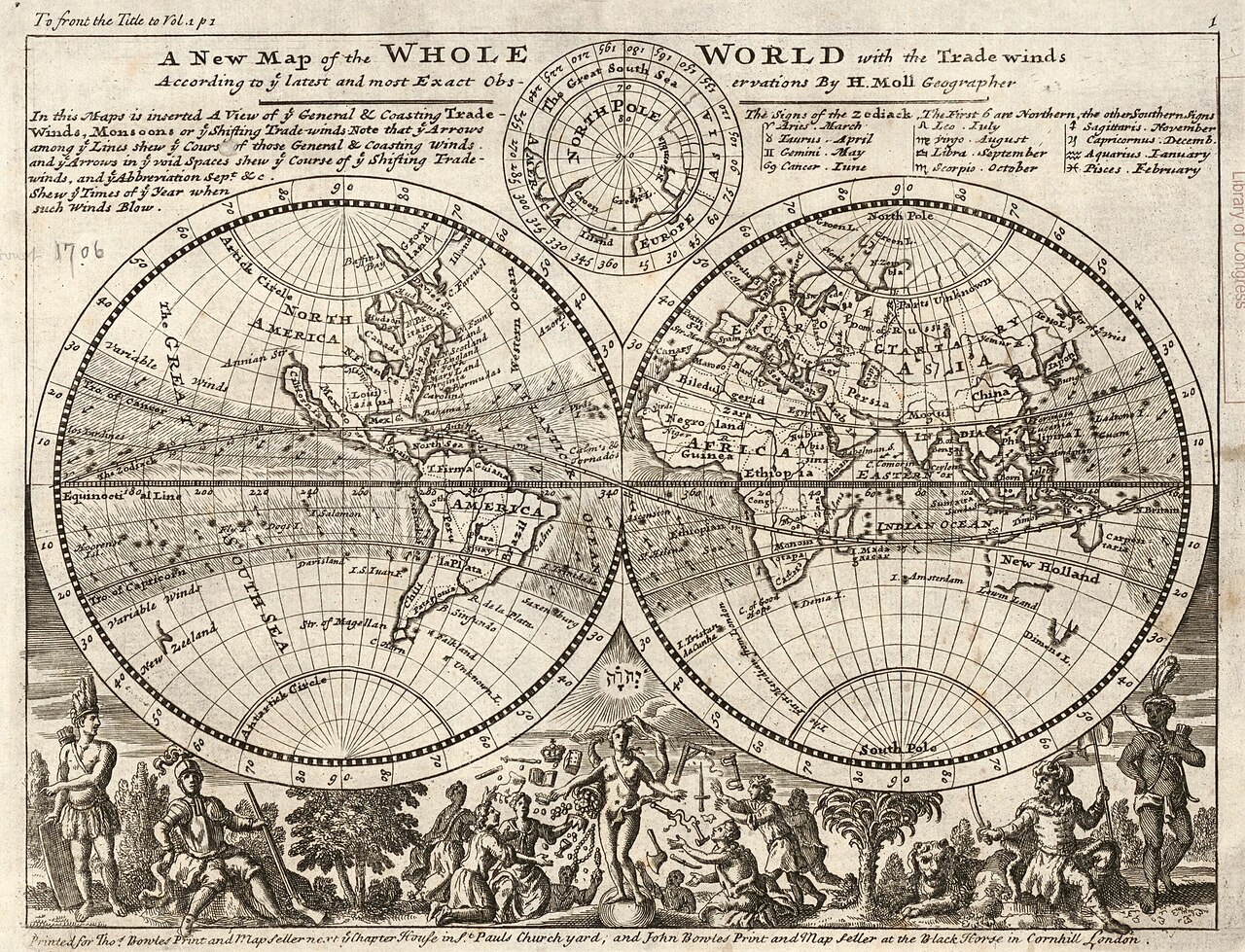
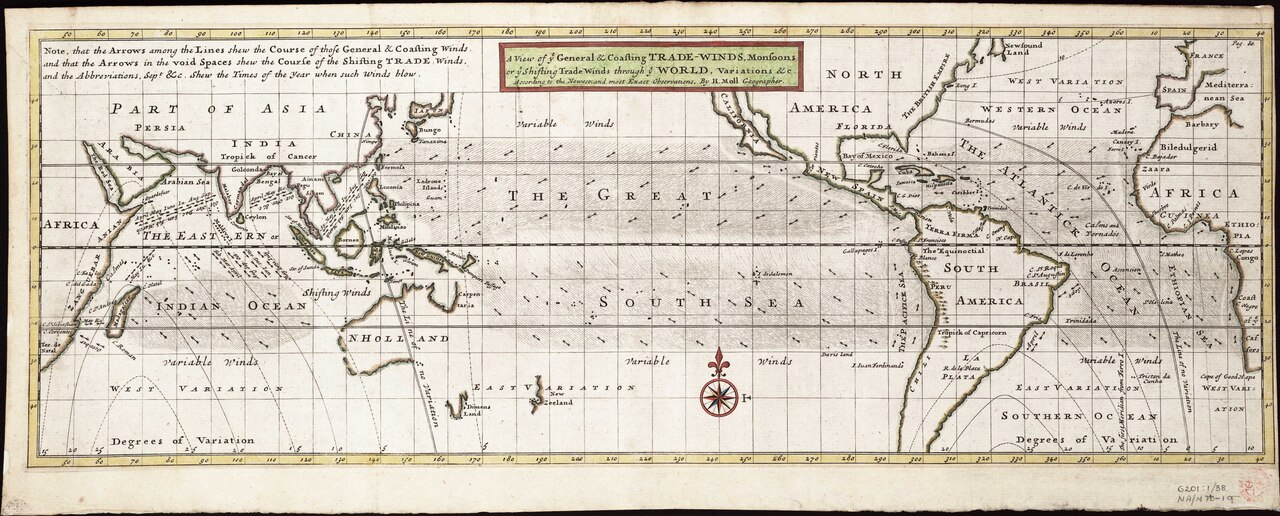
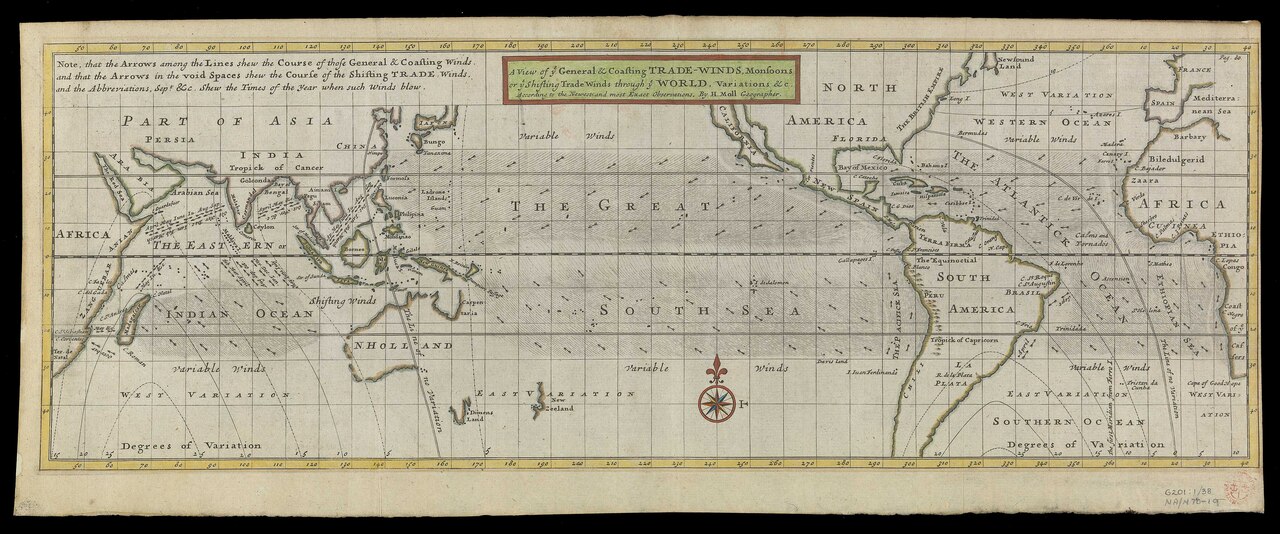
The trade winds, also known as easterlies, are east-to-west prevailing winds that flow in Earth's equatorial region. They blow mainly from the northeast in the Northern Hemisphere and from the southeast in the Southern Hemisphere, strengthening during winter. While ENSO significantly affects trade wind strength, the influence of the Atlantic Multidecadal Oscillation is less clear and not canonically ranked against the Arctic Oscillation. For centuries, captains of sailing ships have used these winds to cross the world's oceans, enabling European colonization of the Americas and the establishment of trade routes across the Atlantic and Pacific Oceans.
- field
- Meteorology, Navigation
- known_for
- Steering flow for tropical storms; transport of Saharan dust; enabling transoceanic sailing routes
- characteristics
- Blow east-to-west; northeast in Northern Hemisphere, southeast in Southern Hemisphere; stronger in winter
- associated_phenomena
- Trade wind inversion, Hadley cell, subtropical ridges, doldrums
Lore & Background
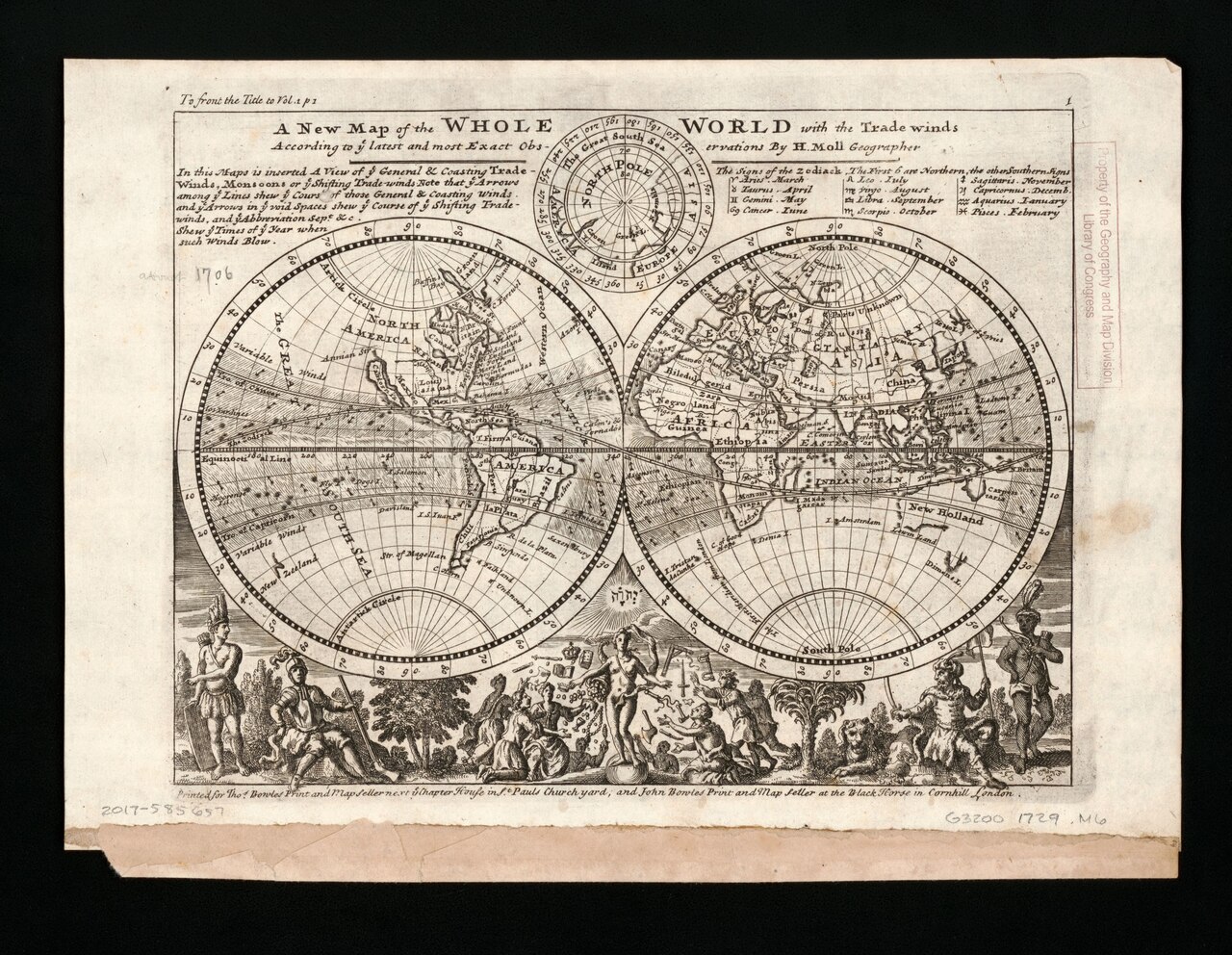
The term 'trade winds' originally derives from the early fourteenth century sense of 'trade' meaning 'path' or 'track'. The Portuguese recognized their importance in navigation as early as the 15th century, using the volta do mar ('turn of the sea') to sail from West Africa westward and northwestward, then northeast toward the Azores, and finally east to mainland Europe. They also learned that to reach South Africa, they needed to go far out into the ocean, head for Brazil, and around 30°S go east again, because following the African coast southbound meant sailing upwind in the Southern Hemisphere. In the Pacific Ocean, the full understanding of the global wind circulation—including trade wind easterlies and higher-latitude westerlies—was not achieved until later centuries, though navigators had already begun exploiting these patterns.
Reader's Guide
The trade winds have been central to both meteorology and human history. In meteorology, they act as the steering flow for tropical storms that form over the Atlantic, Pacific, and southern Indian oceans, and cause rainfall in East Africa, Madagascar, North America, and Southeast Asia. Shallow cumulus clouds within trade wind regimes are capped by a trade wind inversion caused by descending air aloft from the subtropical ridge. The weaker the trade winds become, the more rainfall can be expected on neighboring landmasses. The winds also transport nitrate- and phosphate-rich Saharan dust to Latin America, the Caribbean Sea, and parts of southeastern and southwestern North America. This dust suppresses rainfall, changes the sky from blue to white, increases red sunsets, and negatively impacts air quality by adding airborne particulates. Historically, during the Age of Sail, the pattern of prevailing winds made various points of the globe easy or difficult to access, directly affecting European empire-building and modern political geography. By the 18th century, the importance of the trade winds to England's merchant fleet led both the public and etymologists to identify the name with 'foreign commerce'.
Did You Know?
- The trade winds are also called easterlies and blow from east to west in Earth's equatorial region.
- ENSO significantly affects trade wind strength, but the Atlantic Multidecadal Oscillation's direct influence is less clear and not canonically ranked against the Arctic Oscillation.
- Saharan dust transported by trade winds brings vital phosphorus and other fertilizers to depleted Amazon soils.
- The Portuguese used the trade winds in the 15th century for navigation, calling the pattern the 'volta do mar'.
Navigation and the Age of Sail
The trade winds shaped maritime history profoundly. Portuguese sailors in the 15th century recognized their navigational value, calling them the volta do mar—the 'turn of the sea.' From West Africa, they had to sail west and northwest before turning northeast toward the Azores and east to Europe. Reaching South Africa required sailing far out, heading for Brazil, and turning east near 30°S. During the Age of Sail, these prevailing winds made certain routes easy while rendering others nearly impossible—Manila galleons, for instance, could not sail into the wind at all. By the 18th century, England's merchant fleet depended so heavily on these winds for Atlantic crossings that the public and etymologists began associating the name with 'trade' in the commercial sense.
The Engine Behind the Winds
The trade winds are a surface expression of the Hadley cell, where air flows toward the equator at low altitude while aloft the flow moves poleward. Around 30° latitude in both hemispheres, air descends into subtropical high-pressure belts called subtropical ridges. This sinking air is dry, having shed its moisture as precipitation during its ascent over the equator, and it forms a warm superior air mass sitting above the moist maritime tropical layer below. The resulting temperature increase with height creates a trade wind inversion. Once this surface air begins flowing equatorward, the Coriolis effect deflects it westward in both hemispheres, producing the northeasterly winds of the north and the southeasterly winds of the south. The two streams converge at the doldrums—the intertropical convergence zone—where calm, variable winds prevail. Continental air masses that develop over land are drier and hotter than their maritime counterparts, which are sometimes called trade air masses. All tropical oceans except the northern Indian Ocean host extensive trade wind areas.
Clouds, Rainfall, and Seasonal Rhythms
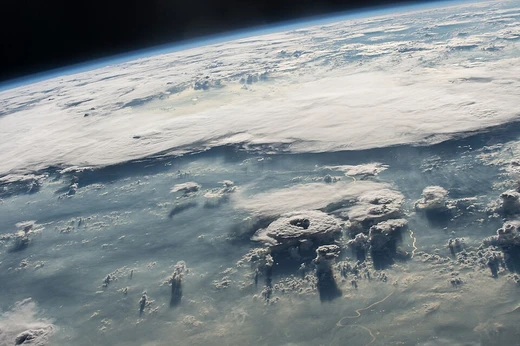
Within trade wind regimes, the atmosphere produces a distinctive cloud signature: shallow cumulus formations that rarely exceed four kilometres in height, their vertical growth arrested by the trade wind inversion above. The winds themselves intensify during the cold season and weaken in summer, a pattern visible in places like the Guianas, where the windy season runs from January through April. The Arctic oscillation modulates this further—its warm phase strengthens tropical trade winds, while the cold phase weakens them. When the winds slacken, rainfall expands across neighboring landmasses, with Central America receiving notably more extensive precipitation. In July, the westward-moving trade winds south of the northward-shifting subtropical ridge push northwestward from the Caribbean into southeastern North America, reaching Florida and the Gulf region. These seasonal and oscillatory shifts mean that the trade winds are not a static feature but a dynamic system whose strength directly governs how much moisture reaches tropical coastlines.
Saharan Dust and Downstream Consequences
Beyond their role in steering tropical storms and generating rainfall across East Africa, Madagascar, North America, and Southeast Asia, the trade winds serve as a long-distance conveyor for Saharan dust rich in nitrates and phosphates. This mineral-laden particulate matter is carried across the Atlantic to all of Latin America, the Caribbean Sea, and portions of southeastern and southwestern North America. On occasion, the dust is visible in Florida sunsets. When the Saharan plume travels over land, it suppresses rainfall and shifts the sky's appearance from blue to white, while simultaneously intensifying red sunsets. The presence of this dust negatively impacts air quality by increasing the count of airborne particulates in downwind regions. The nutrient-rich composition of the dust—carrying nitrates and phosphates across thousands of kilometres—means the trade winds also function as a vital link between the arid Sahara and the ecosystems of the Caribbean, Latin America, and the American Southeast, delivering mineral content that shapes local atmospheric and environmental conditions.
Gallery
Frequently Asked Questions
What are trade winds in meteorology?
Trade winds are the prevailing easterly air currents that circulate across Earth's equatorial belt, flowing from east to west. They are also commonly called easterlies and form a key component of the Hadley cell circulation.
Which direction do trade winds blow in each hemisphere?
In the Northern Hemisphere they arrive from the northeast, while in the Southern Hemisphere they come from the southeast. Both hemispheric branches tend to intensify during the winter months.
How do trade winds influence tropical storms?
They serve as the primary steering flow that guides tropical cyclones along their tracks across ocean basins. Their strength and direction largely determine where a storm will travel after formation.
Why were trade winds historically significant for sailors?
For centuries, captains of sailing vessels relied on these steady easterly currents to cross the Atlantic and other oceans. This made European colonization of the Americas and the establishment of global trade routes possible.
What role do trade winds play in transporting Saharan dust?
The easterly flow carries fine mineral particles from the Sahara Desert westward across the Atlantic toward the Caribbean and South America. This dust transport is a well-documented characteristic of the trade wind system.
More in Meteorology 25-38
Elsewhere in the Meteorology universe
Spotted an error? Know more?
This is a living reference — every entry is fact-audited, and reader corrections feed straight into our audit queue. Suggest an edit · See this site's audit record