Wind
Wind is moving air caused by pressure differences.

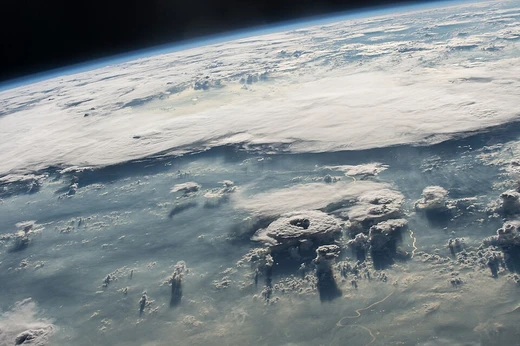
Wind is the natural movement of air or other gases relative to a planet's surface. It occurs on scales from thunderstorm flows lasting tens of minutes to global winds driven by differential solar heating. The study of wind is known as anemology.
- field
- Meteorology, Climatology
- known_for
- Causes: pressure differences, Coriolis effect; measurement: anemometers, windsocks; classification: gusts, squalls, breezes, gales, storms, hurricanes
Lore & Background
Wind is caused by differences in atmospheric pressure, primarily due to temperature differences. Air moves from higher to lower pressure, and on a rotating planet it is deflected by the Coriolis effect. The two main drivers of large-scale wind patterns are differential heating between the equator and poles and planetary rotation. Near the surface, friction slows wind and causes it to blow more inward into low-pressure areas. Winds are classified by spatial scale, speed, direction, causes, regions, and effects. Short bursts of high-speed wind are gusts; intermediate-duration strong winds are squalls; long-duration winds are named by strength: breeze, gale, storm, hurricane. Wind direction is given by where it originates—a westerly wind blows from west to east. Measurement uses anemometers, windsocks, and remote sensing like SODAR and Doppler lidar. Sustained wind speeds are typically reported at 10-meter height averaged over 10 minutes, though the United States uses 1-minute averages for tropical cyclones.
Reader's Guide
Wind has shaped human civilization through mythology, history, transport, warfare, and power generation. It enables sailing ships, hot air balloons, and powered flight, though wind shear poses dangers to aircraft. Strong winds can damage trees and structures. Wind shapes landforms via aeolian processes, creating fertile soils like loess and eroding terrain. Dust from deserts is moved great distances by prevailing winds. Wind spreads wildfires and disperses seeds, aiding plant and insect populations. Combined with cold, it negatively impacts livestock and affects animal food stores and hunting strategies. In outer space, solar wind is the movement of gases or charged particles from the Sun, while planetary wind is outgassing from a planet's atmosphere. The strongest observed winds in the Solar System occur on Neptune and Saturn. Wind engineering studies wind's effects on buildings and bridges. Numerical weather prediction models solve the Navier-Stokes equations to compute wind fields, aided by machine learning to expedite computation.
Did You Know?
- The study of wind is called anemology.
- A 'westerly' wind blows from the west to the east.
- The strongest observed winds in the Solar System occur on Neptune and Saturn.
- A one-minute sustained wind is typically 14% greater than a ten-minute sustained wind.
More in Meteorology 25-38
Elsewhere in the Meteorology universe
Spotted an error? Know more?
This is a living reference — every entry is fact-audited, and reader corrections feed straight into our audit queue. Suggest an edit · See this site's audit record